Science
Curriculum Vision Statement
At St Jerome, we believe that science underpins a thirst for knowledge and understanding of how and why the natural and physical world works. Science has changed our lives and is vital to the world’s prosperity and our ambitious curriculum is planned as a 7-year journey across the Primary School reflecting the need of developing inquisitive young scientists. The broad and balanced nature of the subject ensures that all children are able to access the learning and children are encouraged to recognise the power of rational explanation and develop a sense of excitement and curiosity about natural phenomena. Our children leave school in Year 6 with the skills necessary to continue developing further.
Investigations are planned with the children’s curiosity in mind whilst also meeting the ‘Working Scientifically’ aspects of the National Curriculum. Children are given the experience of scientific processes, and practical scientific skills to develop their scientific thinking and reasoning. Science has driven forward many successes in society and as such, the acquisition of high-quality science skills fuels our hope that one day, the children of St Jerome may contribute to further advancements in science.
Science Curriculum Map
Below is an overview of the topics covered within each year group and how science curriculum has been designed to ensure progression in knowledge and skills.
|
|
|
|
||||
|
|
||||||
|
|
|
|
|
|
|
|
|
|
|
|
|
|
|
|
|
|
|
|
|
|
|
|
|
|
|
|
|
|
|
|
|
|
|
|
|
|
|
|
|
|
|
|
|
|
|
|
|
Working Scientifically |
|
By the end of KS1 our pupils are taught to:
|
|
By the end of Lower Key Stage 2 our pupils are taught to:
|
|
By the end of Upper Key Stage 2 our pupils are taught to:
|
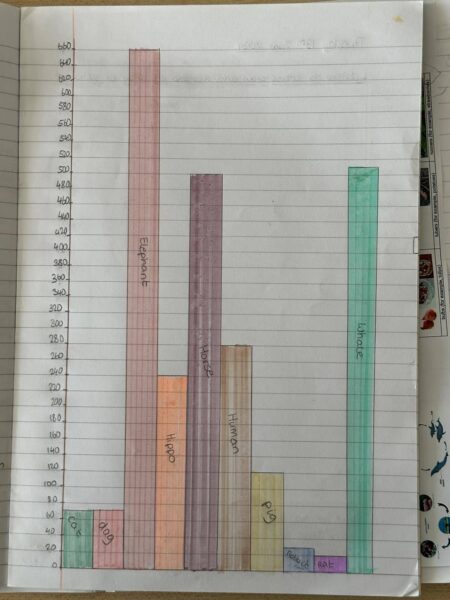
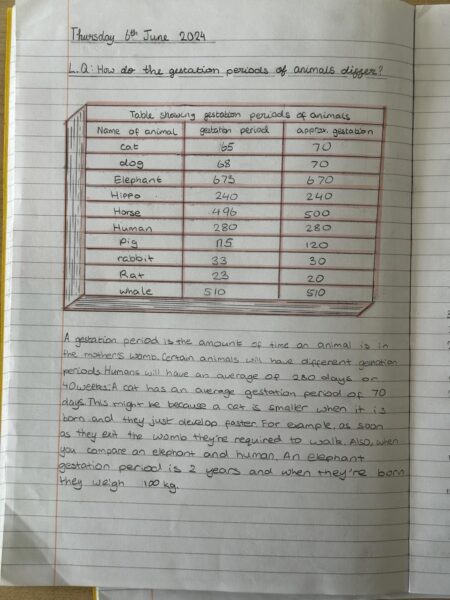
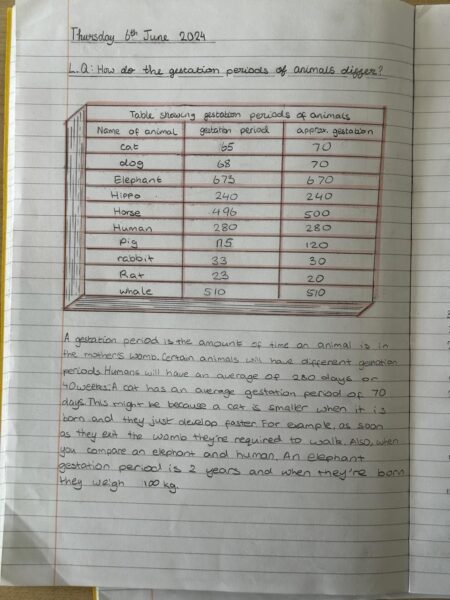
Science Learning Gallery
Useful Links to Support Learning
National Curriculum
For more details of the National Curriculum for science please click here.
Great Places to Visit
If you have the opportunity, we are very fortunate to have a number of exciting places in the local area to visit that will support children’s learning in Science.
How is Science taught at St Jerome?
Science at St Jerome is rooted in practical, hands-on learning and structured around the principles of working scientifically. Lessons are designed to promote exploration, questioning and reasoning through a range of scientific enquiry types, including:
- Fair and comparative testing
- Research using secondary sources
- Observation over time
- Pattern seeking
- Identifying, grouping and classifying
- Problem-solving in real-life contexts
Teachers carefully scaffold learning to ensure progression from supported exploration in Key Stage 1 to increasing independence in Upper Key Stage 2. Pupils are encouraged to ask meaningful questions, make predictions, plan and carry out investigations and reflect on their findings. First-hand experiences are prioritised, supported by high-quality secondary sources to deepen understanding.
Through our science curriculum, children progressively develop:
- Understanding of key scientific domains: biology (living things, humans, plants), chemistry (materials, states of matter) and physics (forces, light, electricity, Earth and space)
- Knowledge of scientific vocabulary and concepts, built systematically across year groups
- Awareness of how scientific ideas develop and change over time
- Asking scientific questions and forming hypotheses
- Planning and carrying out different types of enquiries
- Observing, measuring and using equipment accurately
- Recording, presenting and interpreting data in a range of ways
- Drawing conclusions and using evidence to justify ideas
- Evaluating methods and suggesting improvements
- Cause and effect relationships
- Patterns and relationships in data
- Classification and organisation of information
- Systems and processes (e.g. life cycles, forces, energy transfer)
By the end of Year 6, pupils at St Jerome will:
- Have a secure understanding of key scientific concepts across biology, chemistry and physics
- Be able to independently plan and carry out a range of scientific enquiries, selecting appropriate methods
- Use scientific language accurately to explain, justify and present their ideas
- Analyse data, identify patterns and draw evidence-based conclusions
- Understand the role of science in the wider world, including its impact on society and the environment
- Demonstrate curiosity, resilience and confidence when exploring scientific questions
- Ultimately, pupils leave St Jerome equipped with the knowledge, skills and mindset needed to succeed in secondary science and beyond.
- Oracy in science
- Oracy is central to the teaching and learning of science at St Jerome. Pupils are explicitly taught to communicate their scientific thinking clearly and confidently through structured talk opportunities embedded within lessons.
Children regularly:
- Discuss predictions, observations and conclusions using precise scientific vocabulary
- Engage in partner and group discussions to explore ideas and challenge thinking
- Present findings through explanations and presentations
- Justify their reasoning using evidence from investigations and research
- Teachers model high-quality scientific language and provide sentence stems and scaffolds to support all learners, including those with SEND, while also extending more able pupils through deeper questioning and reasoning opportunities.
Through this focus on oracy, pupils develop the confidence to articulate their ideas, listen actively to others and engage critically with scientific concepts.
How is children’s learning in Science assessed at St Jerome?
Assessment in science at St Jerome is ongoing, purposeful and closely aligned to our curriculum and the principles of working scientifically. It is used to inform teaching, identify misconceptions and ensure that all pupils make strong progress in both scientific knowledge and enquiry skills.
Assessment for learning is embedded within every lesson. Teachers use a range of strategies to continuously check understanding, including:
- Targeted questioning to probe and deepen pupils’ thinking
- Observation of pupils during practical enquiries and discussions
- Review of recorded work in books, including diagrams, data tables and written explanations
- Use of pupil explanations to assess understanding of scientific vocabulary and concepts
- Immediate feedback and in-the-moment adaptations to teaching
These approaches allow teachers to identify misconceptions quickly and provide appropriate support or challenge.
Pupils’ enquiry skills are assessed progressively across the strands of:
- Asking questions
- Planning and carrying out investigations
- Observing and measuring
- Recording and presenting data
- Interpreting results and drawing conclusions
- Evaluating and refining approaches
Teachers assess how independently pupils apply these skills, with expectations increasing from supported exploration in Key Stage 1 to independent enquiry in Upper Key Stage 2.